English
Looking for reliable china p1.875 led video wall manufacturers but feeling overwhelmed by the sheer number of suppliers out there? You're not alone. I've spent years sourcing LED displays for commercial installations across North America and Europe, and trust me — finding the right factory at the right price is like navigating a maze blindfolded. Let me break everything down so you can make a confident purchasing decision.
Before we dive into manufacturers, let's make sure we're on the same page about why P1.875 even exists as a thing. The 1.875mm pixel pitch sits in this interesting middle ground — it's tighter than the common P1.9 and P2.5 options, but it doesn't carry the brutal price premium of sub-1.5mm fine-pitch displays. You're looking at roughly 284,000 pixels per square meter, which gives you genuinely sharp text and clean video playback at viewing distances of about 1.8 to 5 meters.
That's why it's become a go-to for:
Corporate lobbies and boardrooms — where executives want crisp presentations without squinting
Retail flagship stores — product imagery that actually looks like the real thing
Broadcast and studio environments — camera-friendly refresh rates at a pixel pitch that reads well on screen
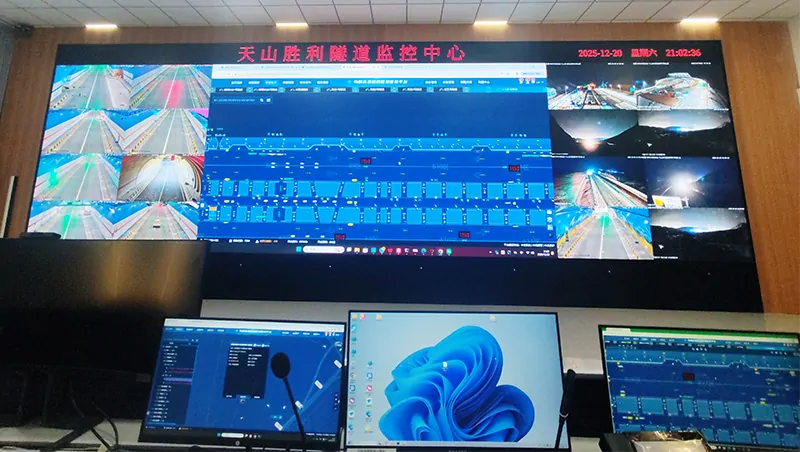
Control rooms — where operators need to read detailed data across large multi-screen arrays
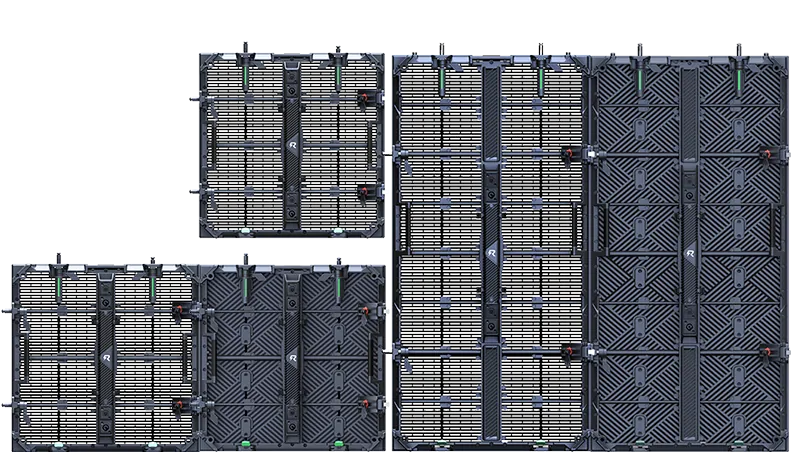
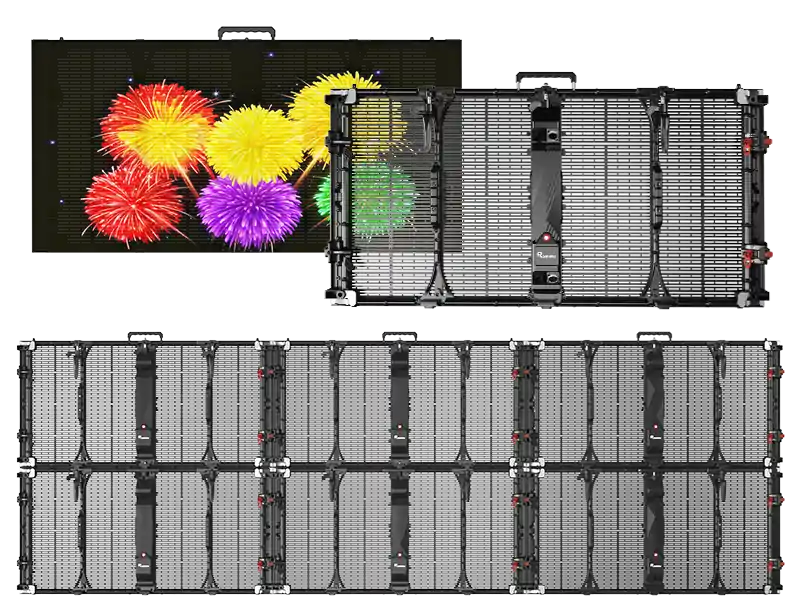
The thing is, P1.875 panels are typically built on a 500×500mm or 500×250mm cabinet grid, which means you can scale them into virtually any wall dimension without awkward cut-offs. Most models also natively support 16:9 configurations, so your content team won't be fighting black bars.
This is probably the single most important thing I can tell you. China's LED display industry is massive — there are thousands of companies listing themselves as "manufacturers" online. But a significant chunk of them are trading companies or integrators who source panels from actual factories, add their branding, and mark up the price 20–40%.
A genuine manufacturer will have:
Their own SMT (Surface Mount Technology) production lines — ask for photos or a live video walkthrough
An aging test room where panels run for 48–72 hours before shipping
In-house quality control labs with integrating sphere equipment for brightness and color calibration
A factory address you can verify on satellite maps (Shenzhen's Bao'an and Longgang districts are the main hubs)
Monthly production capacity of at least 1,500–2,000 sqm
Red flags that suggest a trading company:
They can't provide a real-time factory tour or get defensive when you ask
Their product catalog spans everything from LED displays to solar panels to consumer electronics
They offer "any size, any pixel pitch" with no minimum order — real factories have production constraints
Their website has stock photos that appear on dozens of other supplier pages
I learned this the hard way. My first bulk order came from a company that looked great on paper. Turned out they were outsourcing to three different factories depending on which one had capacity that month. The color consistency between batches was... let's just say my client was not happy.
If you're importing P1.875 LED video walls into North America or Europe, certifications aren't optional — they're the difference between your shipment clearing customs or getting held at the port. Here's what you need to know:
| Certification | Market | What It Covers |
|---|---|---|
| ETL or UL Listed | USA & Canada | Electrical safety — often required by local building codes for permanent installations |
| FCC Part 15 Class B | USA | Electromagnetic emissions — mandatory for any electronic device sold in the US |
| CE (EN 60598 + EN 55032) | European Union | Safety + EMC combined — covers all EU member states |
| RoHS / WEEE | EU & UK | Restriction of hazardous substances + recycling compliance |
| BIS | India | Required if you're also sourcing for the Indian market |
| KC | South Korea | Korean safety and EMC certification |
One thing I want to flag — a lot of manufacturers will tell you they're "CE certified" and leave it at that. But CE is a broad umbrella. Ask specifically whether their certification covers EN 55032 (EMC for multimedia equipment) and EN 62368-1 (the current safety standard that replaced the old EN 60065 and EN 60950). If they can't produce the actual test report from a recognized lab like TÜV, SGS, or Intertek, the certificate might just be a piece of paper.
For North American projects, ETL listing carries more weight with inspectors than self-declared compliance. It means an NRTL (Nationally Recognized Testing Laboratory) has actually tested your product. Some manufacturers have ETL through CSA Group or Intertek — both are legitimate.
Let me be straight with you on pricing because this is where buyers get burned the most. I've put together a rough framework based on what I've seen across multiple manufacturers and order volumes. Keep in mind these are ballpark figures and fluctuate with LED chip costs, aluminum prices, and exchange rates:
| Order Volume | Price per sqm (USD) | Notes |
|---|---|---|
| 1–5 sqm | $1,300–$1,900 | Sample/small project pricing |
| 5–20 sqm | $1,000–$1,400 | Sweet spot for most commercial installs |
| 20–80 sqm | $750–$1,050 | Dedicated production batch |
| 80+ sqm | $580–$800 | Full customization, volume discount |
What drives the price up or down:
LED chip brand — Nationstar or Kinglight chips add maybe $40–$70/sqm over generic alternatives, but the longevity difference is massive
Driver IC — Macroblock MBI5124 or similar high-end drivers give you better low-gray performance and cost roughly 8–12% more
Cabinet material — Die-cast aluminum is lighter and more precise than stamped steel, but adds $60–$100/sqm
Refresh rate — 3840Hz panels cost about 10–15% more than 1920Hz, but if you're doing any camera-based work, it's non-negotiable
Front vs. rear service — Front-maintenance designs with magnetic modules are pricier but save on installation depth
If someone quotes you $350/sqm for a P1.875 panel, something is very wrong. That price point means recycled LEDs, no aging tests, and a power supply that'll fail within a year. I've seen it happen.
When you're collecting quotes from different china p1.875 led video wall manufacturers, you'll want to compare apples to apples. Here's the spec sheet I use as a baseline:
| Parameter | Minimum Acceptable | What I'd Recommend |
|---|---|---|
| Pixel Pitch | 1.875mm (±0.05mm) | 1.875mm (±0.02mm) |
| Pixel Density | 284,000 px/m² | 284,444 px/m² (exact) |
| Brightness | 600 nits | 800–1,000 nits |
| Refresh Rate | 1,920 Hz | 3,840 Hz |
| Contrast Ratio | 3,000:1 | 5,000:1+ |
| Gray Scale | 14-bit | 16-bit |
| Viewing Angle | 140°H/140°V | 160°H/160°V |
| Cabinet Weight | Under 8 kg (500×500mm) | Under 6.5 kg |
| Power (avg) | Under 280W/sqm | Under 200W/sqm |
| Lifespan | 50,000 hours | 100,000 hours |
| IP Rating | IP31 (indoor standard) | IP43 for high-traffic areas |
One thing that doesn't get talked about enough is gray scale performance. A 16-bit gray scale gives you 65,536 levels of brightness per color channel, which translates to smoother gradients and better low-brightness color accuracy. This matters a lot if your video wall will display content in dim environments — think hotel lobbies or luxury retail. A 14-bit panel in the same setting will show visible banding in dark scenes.
The greater Shenzhen area produces somewhere around 70–80% of the world's LED displays. Within that region, Bao'an District and Longgang District are where most of the established manufacturers are clustered. The supply chain is incredibly tight — LED chip suppliers, PCB manufacturers, die-casting foundries, power supply makers, and control system companies are all within a 30–40km radius.
But here's the thing — just because a factory is in Shenzhen doesn't automatically mean they're good. The district is home to both billion-dollar publicly listed companies and garage operations with two soldering stations. What matters is the individual factory's capabilities, not the zip code.
That said, being in the Shenzhen ecosystem does give manufacturers advantages:
Faster component sourcing — if a specific driver IC is on backorder, they can often find stock from a neighboring factory
Competitive pricing — the density of manufacturers keeps margins honest
Skilled labor pool — experienced SMT operators and QC technicians are readily available
Logistics infrastructure — Shenzhen Yantian and Shekou ports handle massive container volumes daily
The cheapest quote almost always costs more in the long run. I had a client who saved $4,000 on a 30-sqm installation by going with the lowest bidder. Eight months later, they had 14 dead modules, noticeable color shift across panels, and a power supply failure that took out an entire section. The repair and replacement cost was nearly double what they originally saved.
Never — and I cannot stress this enough — place a bulk order without testing at least one cabinet first. A sample panel lets you verify actual brightness (many manufacturers inflate specs by 20–30%), check for dead pixels, assess build quality, and confirm color temperature. Most reputable factories will send a sample for $250–$450, often credited against your bulk order.
LED chips are sorted into "bins" based on their wavelength and brightness. If your panels use chips from different bins, you'll see visible color patches across a large video wall. Always specify that all chips should be from the same bin, ideally within ±2.5nm wavelength and ±5% brightness tolerance.
Order 5–8% extra modules from the same production batch. When a panel fails two years from now (and they do fail), you'll need exact-match replacements. Reordering from a new batch months later is a gamble on color consistency.
This comes up a lot, so let me break it down clearly.
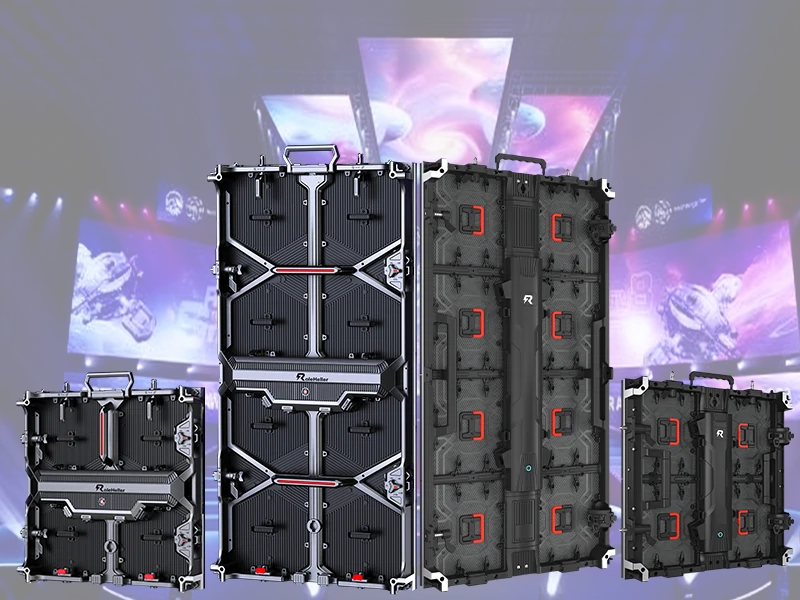
Rental P1.875 panels are built for repeated assembly and disassembly. They feature die-cast aluminum cabinets with precision-machined edges, quick-lock mechanisms between cabinets, and ruggedized connectors rated for hundreds of mate cycles. They're lighter (around 5.5–7 kg per 500×500mm cabinet) and often support slight curvature adjustments. The trade-off is they cost 20–30% more per square meter than fixed-install panels.
Fixed installation P1.875 panels are designed to go up and stay put. They can be thinner (some models under 45mm deep), use front-service magnetic modules for wall-flush mounting, and don't need the reinforced connectors that rental cabinets require. They're more cost-effective for permanent installations like corporate lobbies, control rooms, or retail displays.
If you're an AV rental company or events outfit, the extra investment in rental-grade cabinets pays for itself within a dozen shows. For a permanent install, there's simply no reason to pay the rental premium.
Getting the panels on the wall is only half the battle. Here's what I've learned from overseeing dozens of P1.875 installations:
Structural prep — A standard 500×500mm P1.875 cabinet weighs between 5.5 and 7.5 kg. A 4×3 wall (12 cabinets) plus mounting hardware lands around 75–100 kg. That's not trivial. Make sure your wall structure — whether drywall with backing, concrete, or steel frame — is rated for the load. I've seen walls bow under the weight because nobody checked.
Power planning — P1.875 panels typically draw 200–280W/sqm at average brightness. A 10-sqm wall pulls 2,000–2,800W continuously. You'll need dedicated circuits, and in most commercial settings, a licensed electrician should handle the power distribution. Don't daisy-chain too many cabinets on a single circuit.
Calibration — After physical installation, every panel needs to be color-calibrated for uniform brightness and white balance. This is typically done using the receiving card's built-in calibration tools (NovaStar's LED Vision or Colorlight's software) combined with a colorimeter. Budget a full day for calibration on a wall larger than 8 sqm.
Control system — NovaStar dominates the market for good reason. Their MCTRL4K, VX600, and VX1000 processors handle 4K input and offer per-panel color correction. Colorlight is a solid alternative, especially for larger installations where their A-series processors scale well. Brompton is the premium option for broadcast and high-end rental.
Typical production timelines from most P1.875 LED manufacturers in China:
Standard models in stock: 3–7 business days
Custom configurations (specific brightness, refresh rate, cabinet color): 15–25 business days
Large bulk orders (100+ sqm): 25–40 business days
For shipping to North America and Europe:
Sea freight (FCL): 25–35 days to US West Coast, 30–40 days to Northern Europe. This is by far the most cost-effective option for anything over 3–4 sqm.
Air freight: 5–8 days. Use this for urgent projects or sample orders only — it can cost 4–6x more than sea freight per kilogram.
Express courier (DHL, FedEx, UPS): 3–5 days. Only practical for spare parts or a single sample cabinet.
One practical tip — make sure your manufacturer packs panels in proper flight cases or reinforced crates with foam cushioning. LED modules are fragile. I've had shipments arrive with cracked PCBs because someone thought cardboard boxes were sufficient for ocean freight.
Most established P1.875 LED manufacturers work with these payment structures:
30% deposit, 70% before shipment — the industry standard for buyers with some order history
100% irrevocable L/C at sight — typically for orders exceeding $50,000
Alibaba Trade Assurance — strongly recommended for first-time orders. It holds your payment in escrow and releases it only when you confirm the goods meet the agreed specs.
For your first one or two orders with a new manufacturer, I'd lean heavily toward Trade Assurance or a similar escrow service. It gives you real leverage if there are quality disputes. After you've built a track record together, you can negotiate net terms or open account arrangements.
Also — get everything in writing. Product specs, warranty terms, delivery timeline, penalty clauses for late shipment. A proper proforma invoice should cover all of this. Verbal agreements mean nothing when things go sideways.
Most wholesale P1.875 LED manufacturers offer 2–3 year warranties covering LED chips, driver ICs, power supplies, and receiving cards. Some premium brands push 5 years. But here's what matters — read the fine print on what's actually covered.
Questions to ask before you order:
Does the warranty cover parts only, or does it include shipping costs for replacements?
What's their response time for a warranty claim? 48 hours? A week?
Do they stock spare modules for your specific model, and for how long after your purchase?
Can they provide remote technical support for troubleshooting?
A manufacturer who answers these questions confidently and puts the details in writing is one worth working with. One who waves it off with "don't worry, our quality is very good" — that's your cue to keep shopping.
At the end of the day, sourcing P1.875 LED video walls from China comes down to doing your homework. Verify the factory, test samples, understand realistic pricing, and build a relationship with a supplier who's transparent about their capabilities and limitations. It takes more time upfront, but the payoff is a video wall installation that looks stunning and performs reliably for years — without the surprise costs and headaches that come from cutting corners.
If you've been through this process yourself, I'd genuinely like to hear how it went. What worked, what didn't, what you'd do differently. Drop your experience in the comments.
Q1: What is the pixel density of a P1.875 LED video wall?
A P1.875 LED panel has a pixel density of approximately 284,444 pixels per square meter, calculated from the 1.875mm distance between each pixel. This delivers sharp imagery suitable for viewing distances of roughly 1.8 to 5 meters.
Q2: Can P1.875 LED video walls be used outdoors?
Standard P1.875 panels are designed for indoor use with IP31 protection. Outdoor applications require IP65-rated cabinets, brightness levels of 5,000+ nits, and UV-resistant materials — all of which add 30–50% to the base cost.
Q3: What's the typical lead time for ordering P1.875 panels from China?
Standard models in stock ship within 3–7 business days. Custom configurations take 15–25 business days, and large bulk orders (100+ sqm) may require 25–40 business days of production time.
Q4: What control systems work with P1.875 LED video walls?
NovaStar (MCTRL4K, VX600, VX1000), Colorlight (A-series), Linsn, and Brompton are the most widely compatible control systems. NovaStar holds the largest global market share and offers the broadest manufacturer support.
Q5: How much does a P1.875 LED video wall cost per square meter?
Wholesale pricing typically ranges from $580 to $1,900 per square meter depending on order volume, LED chip brand, cabinet material, refresh rate, and whether the panels are rental-grade or fixed-installation.
Q6: What's the difference between P1.875 and P1.9 LED panels?
The pixel pitch difference is minimal (1.875mm vs. 1.9mm), giving P1.875 a slightly higher pixel density (~284,000 vs. ~276,000 px/m²). In practice, the visual difference is negligible at normal viewing distances, but P1.875 has become a popular standard for certain cabinet sizes.
Q7: What warranty should I expect from a P1.875 LED manufacturer?
The industry standard is 2–3 years covering LED chips, driver ICs, power supplies, and receiving cards. Some premium manufacturers offer 5-year warranties. Always confirm whether the warranty includes replacement shipping costs.
Q8: Do I need professional installation for a P1.875 video wall?
For installations under 4 sqm, an experienced AV technician can typically handle it. Larger walls require professional installation including structural assessment, precision leveling, power distribution, and post-installation color calibration.
Q9: How do I ensure color consistency across a large P1.875 video wall?
Order all panels from a single production batch and request LED chips binned within ±2.5nm wavelength and ±5% brightness tolerance. Post-installation calibration with a colorimeter fine-tunes uniformity across the entire display.
Q10: What certifications do I need to import P1.875 LED panels to the US or Europe?
For the US, you'll need ETL/UL listing and FCC Part 15 compliance. For Europe, CE marking covering EN 62368-1 (safety) and EN 55032 (EMC) is required, along with RoHS and WEEE compliance. Always request actual test reports from recognized labs.